Complete Guide to Water Damage Restoration in Eagle Mountain, UT
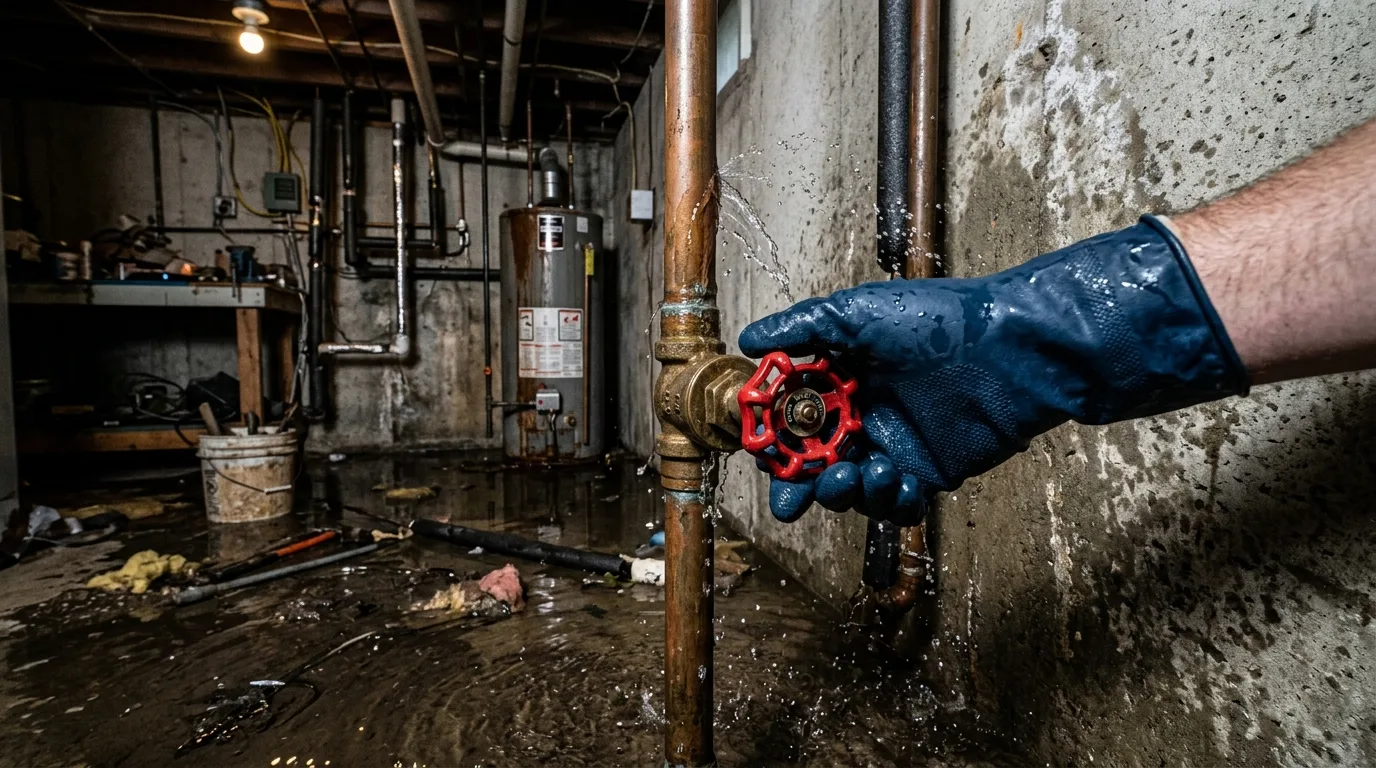
Every year, Eagle Mountain homeowners face one of the most disruptive and costly household emergencies: water damage. Whether it’s a burst pipe in January, a flooded basement in April’s snowmelt, or an appliance overflow that soaks through two floors of a City Center home, water damage restoration in Eagle Mountain, UT follows the same urgent rule — the faster you act, the less it costs. In this guide, we cover the causes, process, costs, and local factors that every Utah County homeowner should understand before disaster strikes.
Water Damage in Eagle Mountain? Call 24/7.
60-minute response across Eagle Mountain and Utah County. IICRC-certified team, all insurance accepted.
Why Water Damage Matters for Eagle Mountain Homeowners
Eagle Mountain sits at roughly 4,800 feet in Utah County’s semi-arid high desert, where four distinct seasons create distinct water damage risks across the calendar year. Spring snowmelt from the Lake Mountains and surrounding terrain turns March through May into the city’s highest flood risk window, a fact the city acknowledges with annual sandbag events and active stormwater infrastructure investment. By April, the wettest month, runoff can overwhelm surface drainage faster than storm systems can handle, particularly in neighborhoods where infrastructure is still catching up with the city’s rapid growth.
Summers bring monsoon activity in July and August — afternoon thunderstorms that deliver significant rainfall in short windows, saturating Utah County’s expansive clay soils before the water can percolate. Clay soils that have already absorbed spring moisture have almost no additional capacity during monsoon season, directing virtually all rainfall as surface runoff toward low points including foundations, window wells, and garage doors. Winter creates its own risk: Eagle Mountain temperatures regularly reach 18–25°F in December and January, and pipes in exterior walls or uninsulated garage areas are vulnerable to freeze-thaw cycles that cause sudden, high-volume bursts.
Understanding this seasonal pattern is the starting point for every water damage restoration in Eagle Mountain conversation. The right time to prepare is before the season, not during it.
Types of Water Damage
Category 1 (Clean Water): Originates from a sanitary source — supply line breaks, sink overflows, rainwater. Least expensive to remediate. Porous materials can be dried in place if addressed quickly.
Category 2 (Gray Water): Contains chemical or biological contaminants — washing machine overflow, toilet backup without solid matter, dishwasher discharge. Requires antimicrobial treatment. Porous materials that absorbed gray water should be assessed individually; some must be removed.
Category 3 (Black Water): Highly contaminated — sewage backup, floodwater from outside the home, water that has been standing long enough to support bacterial growth. All porous materials must be removed and replaced. Full biohazard protocols required. Sewage cleanup in Eagle Mountain is always a category 3 response.
Flood damage: Floodwater from outside the home is automatically category 3 regardless of its visible clarity. It has contacted soil, contaminants, and debris. The flood damage cleanup process in Eagle Mountain must follow category 3 protocols.
The 8-Step Water Damage Restoration Process
The restoration process used by IICRC-certified contractors in Eagle Mountain follows a structured sequence:
Step 1 — Thermal Imaging Inspection: Before any equipment is placed, thermal imaging moisture detection maps all affected areas — visible and hidden. Water migrates through walls, under flooring, and into ceiling cavities faster than it’s visible. This map drives all subsequent decisions.
Step 2 — Insurance Guidance: The contractor reviews the damage scope, identifies covered versus uncovered elements, and advises on the documentation your carrier requires. Starting this relationship correctly prevents claim disputes later.
Step 3 — Water Extraction: Industrial pumps and wet vacuums remove standing and surface water. This is the phase that stops additional migration. Speed here directly reduces total restoration cost.
Step 4 — Pack-Out and Storage: Belongings in the affected area are inventoried, carefully removed, and stored securely during restoration. Contents cleaned professionally return in better condition than DIY handling.
Step 5 — Removal of Affected Materials: Wet drywall, saturated insulation, damaged flooring, and any category 2 or 3-affected porous materials are removed. This step exposes the structural cavity for drying and prevents mold from developing in hidden spaces.
Step 6 — Clean and Sanitize: All remaining surfaces are cleaned with appropriate antimicrobials calibrated to the water category. Category 3 events require hospital-grade disinfection of all surfaces before drying begins.
Step 7 — Dry to IICRC Standards: Industrial dehumidifiers and air movers run continuously until all structural materials reach IICRC-target moisture content. Verified with calibrated moisture meters and repeated thermal imaging — not a timeline.
Step 8 — Repairs and Reconstruction: New drywall, insulation, flooring, and any structural replacements complete the restoration. All reconstruction that affects living space requires Eagle Mountain City building permits, which we handle.
Water Damage Found in Your Eagle Mountain Home?
Call (877) 698-1311 — our IICRC-certified team responds 24/7 to Eagle Mountain, Lehi, Saratoga Springs, and all of Utah County.
How Much Does Water Damage Restoration Cost in Eagle Mountain?
Flood repair in Eagle Mountain typically ranges from $3,260 to $3,514 for a standard residential loss, running $16–$18 per square foot. Labor runs $40–$90 per hour depending on the trade — restoration labor at $40–$60/hr, plumbing at $50–$80/hr, and electrical at $60–$90/hr.
The biggest cost variables:
- Water category — category 3 events cost 2–3× more than category 1
- Affected square footage — each additional room adds significantly
- Mold presence — delays that allowed mold to develop add remediation costs
- Reconstruction scope — how much material requires replacement versus drying
Most water damage from sudden, accidental sources is covered by homeowners insurance. Ground flooding is not covered by standard policies — that requires a separate NFIP or private flood policy.
Eagle Mountain Building Permit Requirements for Restoration
Eagle Mountain City follows the International Residential Code, which requires permits for reconstruction work that affects living space. This is particularly relevant for water damage restoration because the most common reconstruction scenarios — finishing or re-finishing a basement, replacing load-bearing walls damaged by water, installing new plumbing or electrical in affected areas — all trigger permit requirements.
Insurance policies may also require permitted work to maintain full coverage on the restored area. Eagle Mountain’s building department issues permits through the OpenGov portal at eaglemountainut.portal.opengov.com, and inspections are required at key stages. We handle permit coordination as part of every restoration project involving reconstruction.
Preventing Future Water Damage in Eagle Mountain
- Annual pipe inspection: Focus on exterior wall pipes and garage plumbing before winter
- Sump pump testing: Test your sump pump before spring snowmelt season (February)
- Gutter and downspout maintenance: Clear before each seasonal risk window
- Foundation drainage: Confirm downspouts discharge at least 4 feet from the foundation
- Water heater inspection: Water heaters over 8 years old should be professionally inspected annually
- Know your shutoff: Know where your main water shutoff is before you need it
For more seasonal prevention guidance, read our Spring Flood Preparation Guide for Eagle Mountain Homeowners and our guide on preventing frozen pipe bursts in Eagle Mountain winters.
Get a Free Water Damage Assessment in Eagle Mountain
Eagle Mountain Water Damage Restoration — IICRC-certified, all insurance accepted, 24/7 emergency response.
Related resources: