Preventing Frozen Pipe Bursts in Eagle Mountain During Winter
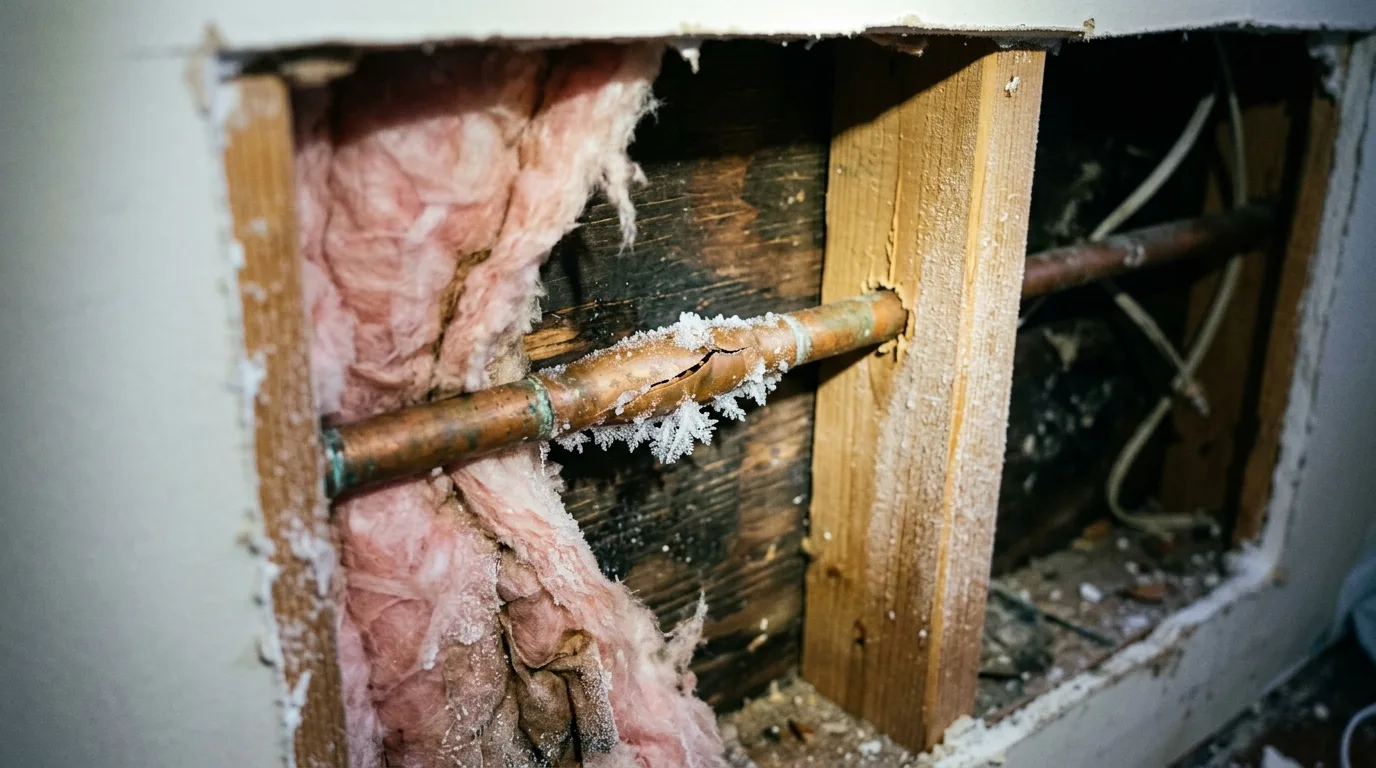
Each winter in Eagle Mountain, homeowners discover the same expensive lesson: water pipes that were never a problem in previous years suddenly fail when temperatures hold below freezing long enough. Eagle Mountain’s winters are colder than many Utah residents expect for a city this close to the Salt Lake Valley — temperatures regularly drop to 18–25°F in December and January, and extended cold snaps of a week or longer are not unusual. When pipes freeze, they often burst not while frozen but in the thaw — releasing water suddenly into walls, under floors, and into finished living spaces.
In this post, we cover which pipes are most at risk in Eagle Mountain homes, the warning signs of freezing before a burst, the steps to take before and during a cold snap, and what to do immediately if a pipe does burst.
Pipe Burst in Eagle Mountain? Call for 24/7 Emergency Extraction.
60-minute response across Eagle Mountain and Utah County. IICRC-certified team, all insurance accepted. (877) 698-1311.
Why Pipe Freezes Are a Real Risk in Eagle Mountain
Eagle Mountain’s location in Utah County at 4,800 feet elevation creates winter cold patterns that differ from lower-elevation Utah communities. The city experiences four to five months of temperatures regularly below freezing — November through March — with the coldest period from mid-December through January. Pipes exposed to sustained temperatures below 20°F for 6 or more hours are at high risk of freezing.
Eagle Mountain’s rapid growth has produced a housing stock where most homes were built in the last 15 years. Newer construction is generally better insulated than older homes, but it introduces a different vulnerability: builders under time pressure on fast-developing subdivisions sometimes place pipes in exterior walls, garages, or crawl spaces with less insulation than the design specifications required. Homes in Eagle Park and newer Cedar Valley sections should be specifically inspected for these construction shortcuts.
The emergency water extraction volume during Eagle Mountain winters is directly tied to cold snap intensity and duration. The weeks following a 7-day cold snap in January are among the busiest weeks of the year for restoration contractors across Utah County.
Which Pipes Freeze First in Eagle Mountain Homes
Exterior wall pipes: The most common failure point. Plumbing routed through exterior walls — particularly on the north and west faces of Eagle Mountain homes, which receive the least sun exposure — is most vulnerable to sustained cold.
Garage and utility area pipes: Water supply lines to utility sinks, garden hose bibs, and water heaters in attached garages often run through uninsulated garage walls or ceilings. When garage temperatures drop to outdoor levels during a cold snap, these pipes are fully exposed.
Crawl space supply lines: Older sections of The Ranches and City Center have homes with crawl space foundations where supply lines run below the insulated floor deck. When crawl space venting allows outdoor air to flow across uninsulated pipes, freezing can occur even when the rest of the home is warm.
Hose bibs and outdoor faucets: Frost-free hose bibs require the water supply to be completely drained past the valve — standard frost-free operation. Hose bibs that still have garden hoses connected when temperatures drop trap water in the line and create freezing risk at the point where the line enters the wall.
Attic supply lines: Less common but high-consequence. Water supply lines to second-floor bathrooms or laundry rooms are sometimes routed through attic space in Eagle Mountain’s ranch-style and two-story homes. Attic temperatures in a cold snap can drop close to outdoor ambient if the insulation is inadequate.
Winter Water Damage in Eagle Mountain — Don't Wait.
Eagle Mountain Water Damage Restoration is on call 24/7 for pipe bursts and winter water emergencies. Call (877) 698-1311.
Types of Frozen Pipe Scenarios
Slow freeze — gradual pressure buildup: The most common scenario. The pipe freezes slowly over several hours as temperatures drop, ice forms and expands inside the pipe, and pressure builds at the ice plug. The pipe splits along the weakest point — usually a fitting, a joint, or a corrosion point. This type of burst is typically not discovered until temperatures rise and flow resumes.
Fast freeze — flash cold event: Less common in Eagle Mountain but possible during sudden cold snaps. A rapid temperature drop can freeze exposed pipes quickly, sometimes producing audible cracking or pops in the walls.
Thaw burst: The most surprising scenario for homeowners. Temperatures rise, ice in the pipe melts, and the water that was held back by the plug rushes through the split or joint that formed during freezing. This is why pipe burst events in Eagle Mountain peak not during the coldest days but in the first 24–48 hours of warming after a cold snap.
Prevention Steps by Priority
Before each winter season (October–November):
- Disconnect all garden hoses from exterior hose bibs and confirm frost-free bibs operate correctly
- Insulate exposed pipes in the garage, crawl space, and utility areas with pipe foam or heat tape
- Seal crawl space vents if your system uses closeable vents for winter
- Know where your main water shutoff is and confirm it operates smoothly
During a forecast cold snap (temperatures below 20°F for 48+ hours):
- Open cabinet doors under sinks on exterior walls to allow heated air circulation
- Allow a slow trickle of water to run from the faucet furthest from the meter on at least one exterior wall run
- Keep the thermostat set to at least 55°F if leaving for travel — pipe freeze risk is not eliminated until temperatures rise above 32°F
- Check the garage temperature if your garage is attached and plumbing runs through it
If you will be away for more than 3 days in winter:
- Have someone check the home every 24–48 hours
- Shut off the main water supply and drain the system if the home will be vacant for more than one week
What to Do If a Pipe Bursts
- Immediately shut off the main water supply. Every Eagle Mountain homeowner should know where this valve is and confirm it operates before winter — not after a burst.
- Turn off electricity to any affected circuits. If water is near outlets, panels, or has reached the basement where electrical runs, call an electrician before restoring power.
- Call for emergency water extraction immediately. Do not wait to assess the “extent” of damage before calling — water damage from burst pipes spreads faster than most homeowners expect. Emergency water extraction in Eagle Mountain needs to begin within hours to prevent structural damage and mold.
- Document everything for insurance. Photograph the burst point, all wet surfaces, and any visible water before cleanup begins.
For the full restoration process after a pipe burst, see our water damage restoration service page. For spring and summer water damage prevention, see our spring flood preparation guide.
Eagle Mountain Winter Water Emergency — We Respond 24/7
Eagle Mountain Water Damage Restoration: (877) 698-1311. IICRC-certified, all insurance accepted, 60-minute response.
Related: