10 Signs of Hidden Water Damage in Your Eagle Mountain Home
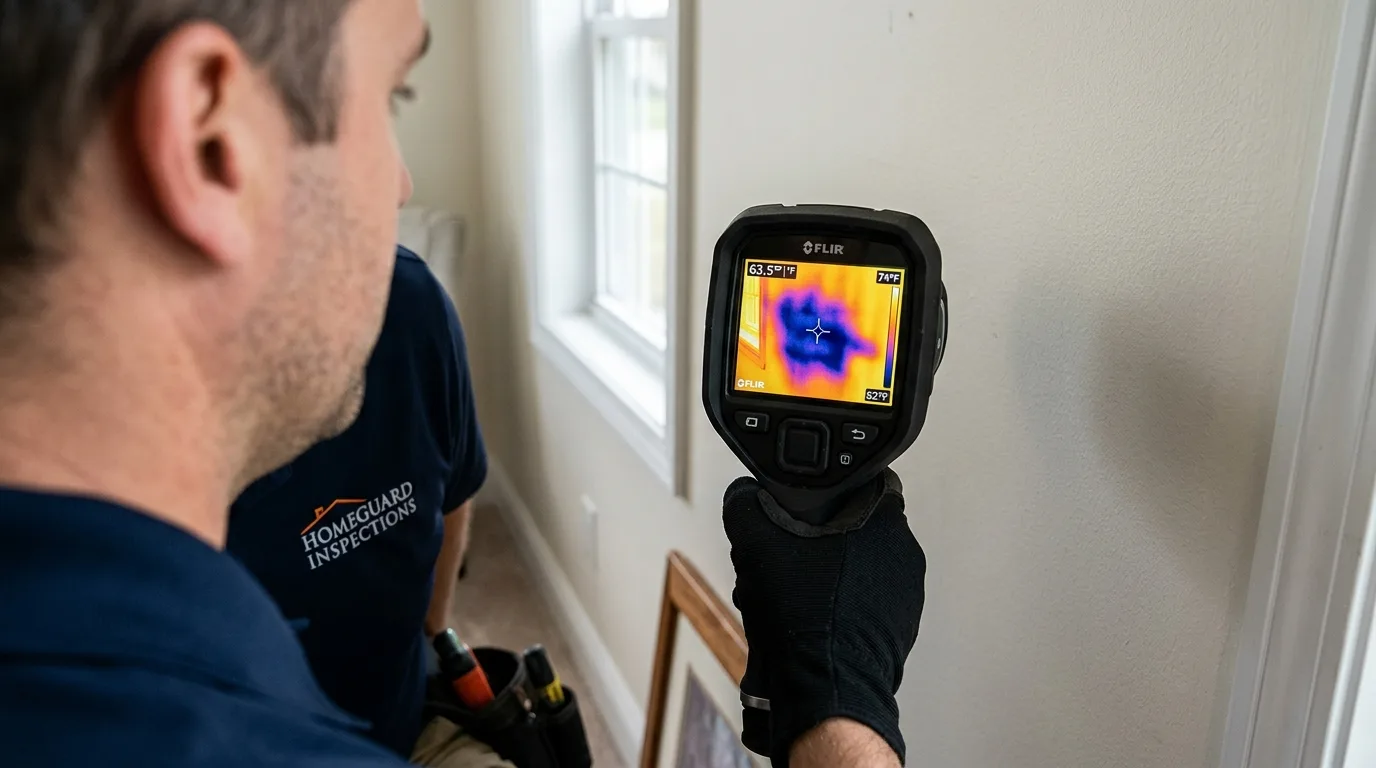
The most expensive water damage in Eagle Mountain homes is often the kind you don’t see immediately. Hidden moisture — inside walls, under flooring, above ceiling tiles, and in crawl spaces — can persist for weeks before it manifests as visible damage or mold. By that point, what might have been a straightforward drying job has become a mold remediation project with structural material replacement. This guide covers the ten warning signs that hidden water damage may already be developing in your Eagle Mountain home.
In this post, we cover the visible, auditory, and structural clues that indicate hidden moisture, how Eagle Mountain’s climate and soil conditions make hidden water damage more likely, and when to call a professional for inspection.
Suspicious of Hidden Water Damage in Your Eagle Mountain Home?
Thermal imaging moisture detection — we find what's hidden. Call (877) 698-1311 for an inspection.
Why Hidden Water Damage Is Common in Eagle Mountain
Eagle Mountain’s rapid development means that many homes were built quickly and may have construction details — vapor barriers, flashing, drainage planes — that perform adequately in normal conditions but fail under the moisture stress of spring snowmelt season or monsoon events. When water damage occurs during these peak risk periods, homeowners often address the visible symptoms (mopping up standing water, running fans) while the actual moisture has already penetrated into wall cavities, insulation, and subfloor assemblies where it becomes invisible.
Utah County’s expansive clay soils compound this by creating a seasonal vapor intrusion cycle: clay soils against foundations absorb moisture during wet periods and slowly release vapor into adjacent structural materials as they dry. This cycle — distinct from flooding events — can slowly raise moisture content in crawl space framing and basement walls over weeks, creating conditions for mold remediation in Eagle Mountain even without a visible water event.
Thermal imaging moisture detection is the only reliable way to find hidden moisture — but understanding the surface symptoms helps you know when to request an inspection.
10 Signs of Hidden Water Damage
1. Musty or earthy odor that doesn’t go away: A persistent musty smell in a basement, bathroom, or corner of a room is one of the most reliable indicators of hidden mold growth — which means hidden moisture has been present long enough for biological activity to begin. In Eagle Mountain homes with finished basements in the Ranches or SilverLake, a musty smell that seems to come from the walls rather than from visible wet surfaces is a strong signal to investigate immediately.
2. Soft, spongy, or buckling flooring: Hardwood, laminate, and LVP flooring that becomes soft, develops high spots, or begins to buckle at the joints has absorbed moisture from below. Subfloor saturation often precedes flooring symptoms by days to weeks. By the time you feel the floor flex, the OSB subfloor beneath may already be significantly damaged.
3. Peeling or bubbling paint or wallpaper: Paint that bubbles, peels, or lifts from the wall is releasing from the substrate due to moisture trapped behind it. This is particularly common on exterior-facing walls and basement walls in Eagle Mountain, where vapor drive from the clay-soil exterior pushes moisture into the wall assembly during wet periods.
4. Discoloration or staining on walls or ceilings: Yellow-brown staining that appears and grows over time — even without a visible leak — indicates water wicking through from a concealed source. Ceiling stains often indicate roof leak paths that are far from the stain’s location; wall stains near the floor may indicate seepage from below.
5. Visible efflorescence on concrete or masonry: White, chalky deposits on basement concrete walls or block foundations are efflorescence — mineral salts carried by water moving through the concrete and deposited on the surface. While not harmful itself, efflorescence is definitive evidence that water is regularly moving through the concrete. In Eagle Mountain neighborhoods with older concrete block foundations, this is a common observation.
Found One of These Warning Signs in Your Eagle Mountain Home?
Eagle Mountain Water Damage Restoration — thermal imaging inspection, IICRC-certified team. Call (877) 698-1311.
6. Warped, cupping, or separated wood framing: Wood framing that becomes visibly warped, develops cupping (boards curling up at the edges), or shows gaps at joints where pieces are pulling apart has experienced moisture cycling — it got wet, dried partially, and the repeated movement damaged the structural connection. This level of damage is typically found during material removal, but in visible areas like unfinished utility spaces, it can be observed directly.
7. Rust stains around fasteners or on metal components: Rust streaks around nail heads in drywall, around screw heads in framing, or on metal HVAC components in the affected area indicate elevated moisture content over an extended period. Fresh water damage doesn’t immediately produce rust; this sign typically indicates a moisture problem that has persisted for weeks or months.
8. Cracking or deteriorating grout and caulk in wet areas: Grout and caulk in showers, tubs, and bathroom floors that is cracking, missing sections, or has turned gray or black has likely been compromised long enough to allow water behind the tile surface. Water intrusion behind tile is one of the most common sources of hidden moisture in Eagle Mountain bathrooms — and by the time the grout shows failure, the cement board, drywall, or framing behind the tile may already be saturated or moldy.
9. Unexplained increases in water bills: A water bill that increases without a corresponding change in usage behavior is a strong indicator of a slow leak — often a supply line behind a wall, under a slab, or in a crawl space. In Eagle Mountain’s newer homes, slab leaks are less common than in older housing stock elsewhere in Utah County, but below-grade plumbing leaks in crawl spaces are an ongoing risk.
10. Allergy symptoms or respiratory issues at home: When residents experience persistent coughing, sneezing, or respiratory symptoms that improve significantly when they leave the home, airborne mold spores from a hidden moisture source are a possible cause. This is not a definitive diagnostic — many things cause respiratory symptoms — but it is a signal worth taking seriously, particularly if any of the above physical signs are also present.
When to Call for a Professional Moisture Inspection in Eagle Mountain
Call immediately if:
- You’ve had any water event in the last 90 days — even if it appeared contained
- You notice any 2 or more of the above signs simultaneously
- You’re purchasing a home in Eagle Mountain with any history of water damage, flooding, or plumbing issues
Our thermal imaging moisture detection process identifies hidden moisture throughout the structure — including areas that a visual inspection would miss — and produces a documented moisture map that serves as both a remediation guide and an insurance documentation tool.
For the full restoration process once hidden water damage is confirmed, see our Water Damage Restoration service page. For mold-specific concerns, see our Mold Remediation service page.
Get a Thermal Imaging Moisture Inspection for Your Eagle Mountain Home
Eagle Mountain Water Damage Restoration — certified inspection, all insurance accepted. Call (877) 698-1311.
Related: