How Long Does Water Damage Restoration Take in Eagle Mountain, UT?
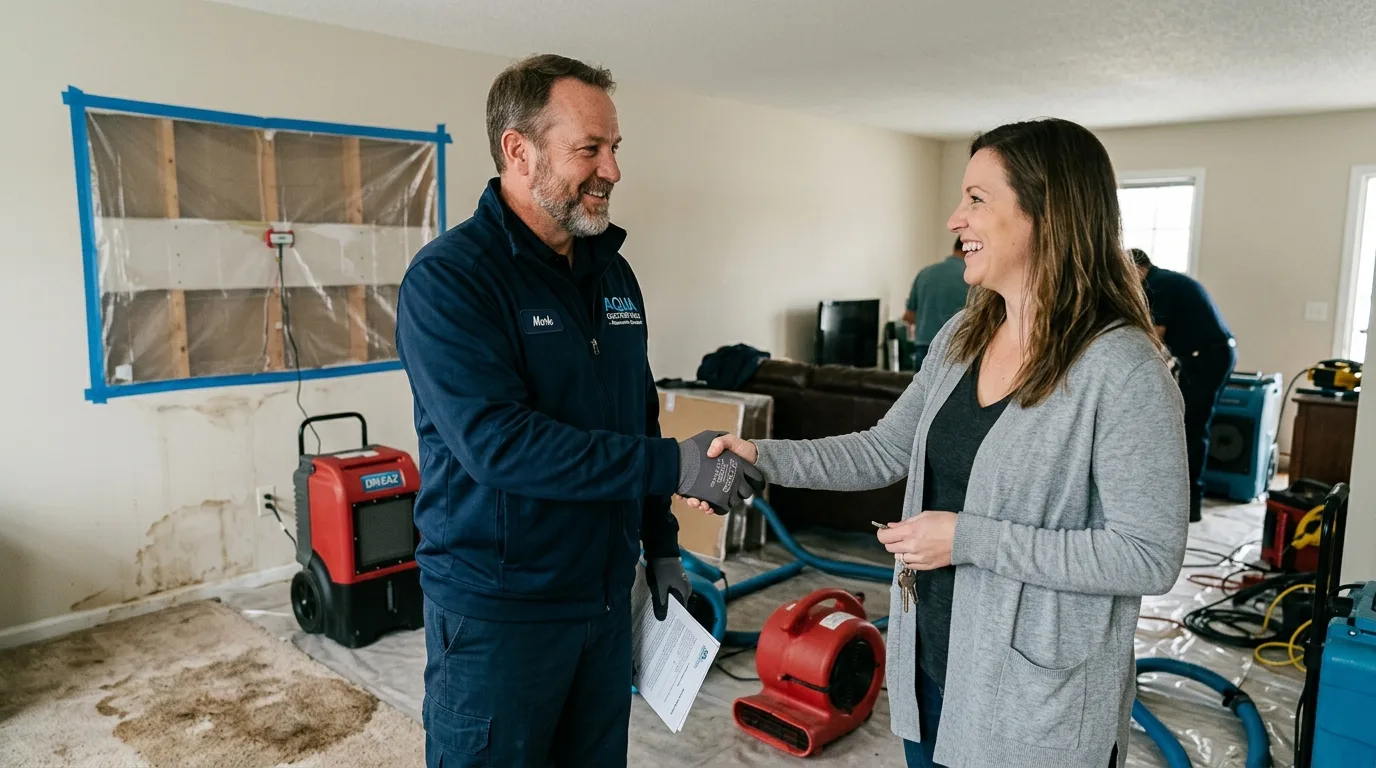
“How long will this take?” is the question Eagle Mountain homeowners ask most after “how much will this cost?” — and for good reason. Water damage disrupts daily life: you may be without flooring, without a usable basement, or living out of part of your home for the duration. Understanding the realistic timeline for water damage restoration in Eagle Mountain, UT helps you plan temporary arrangements, manage your insurance claim timeline, and recognize when a project is running longer than it should.
In this post, we cover the timeline for each restoration phase, what local factors in Eagle Mountain and Utah County affect drying speed, and the signs that a contractor is rushing versus doing the job correctly.
Water Damage in Eagle Mountain? Get a Timeline Estimate.
IICRC-certified team, thermal imaging on every job, 24/7 emergency response. Call (877) 698-1311.
Why Drying Speed Matters for Eagle Mountain Homeowners
By the time a restoration contractor arrives at a City Center or Eagle Park home, the clock has already been running. Water begins migrating into structural materials the moment it’s released — and mold can establish itself within 24 to 48 hours of intrusion. The restoration timeline isn’t just about inconvenience; it’s about preventing a category 1 water event from becoming a category 2 event (through bacterial development) or a mold remediation project (through biological growth in wet structural materials).
Eagle Mountain’s semi-arid climate at 4,800 feet elevation is actually favorable for structural drying compared to coastal or humid markets. Lower average relative humidity means ambient conditions support moisture evaporation from structural materials more quickly. However, this advantage only applies after water is extracted — the extraction phase is the same regardless of climate.
Phase 1: Emergency Response and Water Extraction (Day 1)
Extraction begins the moment our team arrives — typically within 60 minutes of your call. Industrial truck-mounted extraction units, submersible pumps for standing water in basements, and high-velocity wet vacuums for saturated carpet and flooring all operate simultaneously. A standard room extraction takes 30–60 minutes; a flooded basement with significant standing water may take 3–5 hours.
After extraction, thermal imaging moisture detection maps all areas of hidden moisture — inside walls, under flooring, in ceiling cavities, behind cabinetry. This step is non-negotiable for a complete timeline: water found by thermal imaging on Day 1 that is included in the drying plan dries in 3–5 days; water not found until Day 7 (because thermal imaging was skipped) may have grown mold that adds a remediation phase to the project.
Phase 2: Structural Drying (Days 1–5 Typically)
Industrial dehumidifiers and high-velocity air movers begin running immediately after extraction. The drying plan positions equipment based on the thermal imaging moisture map — targeting hidden pockets of moisture in walls, subfloors, and ceiling assemblies, not just visible wet surfaces.
Most residential water damage in Eagle Mountain reaches IICRC target moisture content within 3–5 days. Factors that extend the drying phase:
Finished basement involvement: Finished basement spaces with multiple layers — LVP flooring, OSB subfloor, concrete slab, framing, insulation, drywall — require more time to dry completely than open framing. Homes in The Ranches and SilverLake, where finished basement suites are common, typically run 5–7 days rather than 3–5.
Category 3 events: Sewage or outside floodwater events require material removal before drying begins, which adds 1–2 days to the process. The drying of the structural frame after category 3 material removal typically matches a standard drying timeline.
Time before discovery: A slow leak that was undetected for days before a flood event creates deep saturation in structural materials that requires additional drying time. A burst pipe discovered immediately starts the drying clock sooner and dries faster.
Winter conditions: Eagle Mountain winters (December–February) bring outdoor temperatures that are cold enough to interfere with equipment efficiency if the structure is not heated. Temporary heating may be needed in cold-weather events to maintain drying efficiency.
How Long Will Your Eagle Mountain Water Damage Take to Dry?
Our IICRC team can assess your specific situation and give you an honest timeline. Call (877) 698-1311.
Phase 3: Material Removal and Preparation (Days 1–4, Overlapping With Drying)
Material removal — wet drywall, damaged flooring, saturated insulation — typically begins during or immediately after extraction. Removing affected materials exposes the structural cavity and dramatically accelerates drying of the framing and subfloor. This phase may add 1–2 days to daily activity but reduces the overall drying timeline by giving dehumidifiers direct access to structural surfaces.
For category 3 events, all porous material removal must be completed before drying begins — this is a non-negotiable protocol difference from category 1 and 2 events.
Phase 4: Post-Drying Verification (Day 5–7)
Before equipment is removed and reconstruction begins, our technicians verify complete dryness using calibrated moisture meters across all structural materials and a final thermal imaging pass. This verification step produces the documentation your insurance adjuster needs to confirm the drying phase is complete and reconstruction can begin.
Contractors who skip post-drying verification and move directly to reconstruction risk trapping residual moisture behind new drywall or flooring — creating the conditions for mold growth inside finished walls weeks after the restoration appears complete. Requesting this documentation is a reasonable ask of any contractor.
Phase 5: Reconstruction (1–6 Weeks, Depending on Scope)
Reconstruction begins after drying is verified. Scope ranges from rehanging new drywall and painting in a single room (1–3 days) to full basement reconstruction with new flooring, insulation, drywall, paint, electrical, and trim (2–6 weeks). Factors:
- Whether Eagle Mountain City building permits are required (adds permit processing time — typically 5–10 business days for residential work)
- Availability of materials and subcontractors
- Complexity of the affected space
Most homeowners should plan for 2–4 weeks of active reconstruction for a standard basement water damage event in Eagle Mountain. Insurance-managed projects may move faster when the adjuster has pre-approved the scope; disputes about scope add time.
How to Recognize a Rushed Job
A contractor who removes equipment before moisture readings confirm complete dryness is cutting corners. Signs of a rushed job:
- Equipment removed before Day 3 without documentation showing target moisture content was reached
- No thermal imaging performed post-extraction
- No daily moisture log provided
- Reconstruction started before drying verification documentation is complete
For a complete overview of the restoration process, see our Complete Guide to Water Damage Restoration in Eagle Mountain. For cost context by phase, see our 2026 pricing guide for Eagle Mountain water damage restoration.
Eagle Mountain Water Damage Restoration — Done Right, On Time
IICRC-certified, thermal imaging on every job, transparent timeline documentation. Call (877) 698-1311.
Related: