Emergency Water Extraction Eagle Mountain: What to Expect When You Call
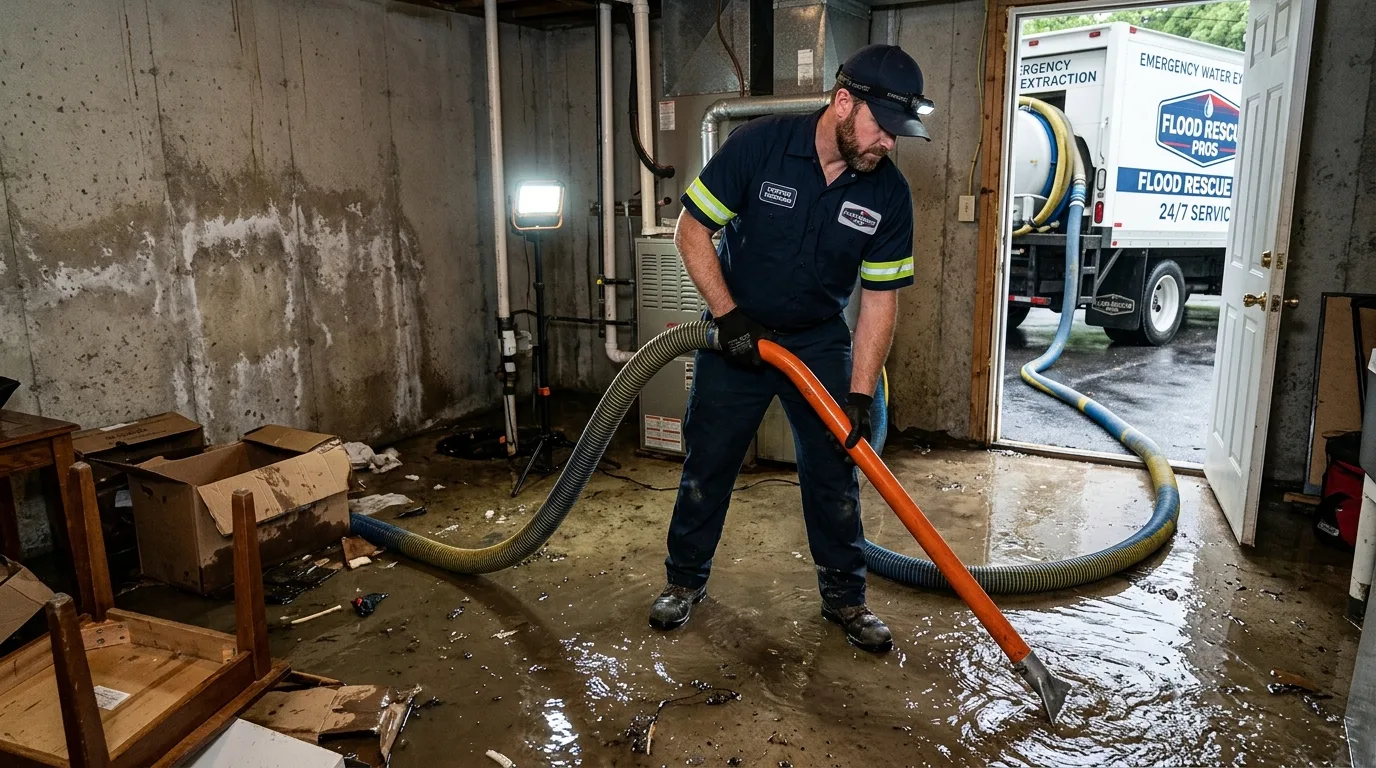
You’ve discovered water flooding your Eagle Mountain home. You know you need to call for emergency water extraction — but you’ve never done this before and you don’t know what to expect. Will someone actually show up at 2 a.m.? How long will it take? What will they do when they get there? What decisions will you need to make? This guide walks through the emergency water extraction process in Eagle Mountain step by step, so you know exactly what you’re getting into before you make the call.
In this post, we cover the emergency call process, what arrives at your door, what the extraction process looks like, and what happens in the days following extraction.
Water Emergency in Eagle Mountain? Call Now — We'll Walk You Through It.
24/7 emergency water extraction across Eagle Mountain and Utah County. (877) 698-1311.
Why Knowing the Process Helps Eagle Mountain Homeowners
The first minutes after discovering water damage in a City Center or Eagle Park home are often the most chaotic. Homeowners are managing the shock of the event, trying to locate shutoff valves, moving belongings, keeping children and pets safe, and simultaneously trying to decide whether to call their insurance company or a restoration contractor first. Having a clear picture of what the extraction process looks like — and what decisions you’ll face — reduces the cognitive load at the worst moment.
The most important thing to know: call for emergency water extraction as soon as the water source is controlled or while you’re still addressing it. Do not wait until you’ve assessed the full extent of damage, cleaned up the obvious water yourself, or waited to see if your insurance company will approve the work. Every hour of delay increases moisture migration and your total restoration cost. Emergency water extraction in Eagle Mountain is available 24 hours a day, every day of the year.
Step 1: The Emergency Call
When you call Eagle Mountain Water Damage Restoration at (877) 698-1311, the person who answers will ask:
- Your address and the best way to access the property
- What happened — is the water source still active or has it been shut off?
- Roughly how much water is present (minor seep, wet carpet, standing water, flooding)
- Whether anyone is in danger or whether there are safety concerns (electrical, structural)
This information lets us dispatch the right equipment and assess whether you need emergency safety precautions before our team arrives. We will give you an estimated arrival time — typically within 60 minutes across Eagle Mountain and Utah County — and talk you through anything you should do before we arrive.
What to do while waiting: If the water source is still active, find and close the main shutoff valve (usually in the utility room, basement, or garage). Turn off electricity to any circuits where water is present near outlets or panels. Photograph the source of the water, all affected surfaces, and water lines on walls — this documentation supports your insurance claim. Do not use a regular household vacuum to try to extract water; it is not designed for this and creates electrical hazard in standing water.
Step 2: Arrival and Initial Assessment
Our team arrives with a truck-mounted extraction unit, submersible pumps (for standing water), moisture meters, and thermal imaging equipment. Before any extraction begins, we do a rapid walk-through to:
- Confirm safety (no active electrical hazard, no structural concerns)
- Identify the water source and confirm it’s controlled
- Assess the water category (clean, gray, or black water) — this determines extraction and cleaning protocols
- Photograph and document the affected areas for the insurance claim file
- Check for spread beyond the visible wet area using moisture meters
The thermal imaging scan takes 15–20 minutes and maps moisture in walls, under flooring, in ceiling cavities, and behind cabinetry. This map drives all subsequent decisions about where to extract, where to place drying equipment, and what materials may need to be removed.
Water Extraction Happening Right Now in Eagle Mountain?
IICRC-certified team — we document everything for your insurance claim. Call (877) 698-1311.
Step 3: Water Extraction
Industrial extraction begins immediately after the initial assessment. The specific equipment depends on the scenario:
Standing water (basement flooding, large volume): Submersible pumps move hundreds of gallons per hour. For large Eagle Mountain basement flooding events — from spring runoff, monsoon events, or major plumbing failures — submersible pumping can run for 1–4 hours before hand extraction begins.
Saturated carpet and flooring: High-capacity extractors with floor wand attachments pull water from carpet pad, surface flooring, and the top layer of the subfloor. This phase typically removes the majority of accessible moisture from floor surfaces.
Structural materials: Truck-mounted extraction units pull moisture from wall cavities (through injection ports if needed), cabinets, and accessible structural assemblies. Not all structural moisture can be extracted directly — some must be removed through the drying phase — but early extraction maximizes what can be removed mechanically before drying equipment takes over.
Step 4: Material Assessment and Removal
Following extraction, our technicians assess each material type in the affected area: can it be dried in place, or does it need to come out? This determination is based on water category and material type:
- Category 1 clean water: Drywall that is wet but not fully saturated may be dried in place by drilling small holes to allow dehumidifier airflow into the wall cavity. Carpet may be saveable if padding is removed quickly.
- Category 2 gray water: Carpet padding must be removed (it cannot be adequately cleaned for category 2 events). Drywall that is saturated or has wicked above a certain height needs to come out.
- Category 3 black water: All porous materials that absorbed water — carpet, padding, drywall, insulation — must be removed regardless of saturation level.
Step 5: Drying Equipment Setup (Days 1–5)
After extraction and material removal, industrial dehumidifiers and high-velocity air movers are positioned according to the thermal imaging moisture map. This equipment runs continuously — 24 hours per day — until all structural materials reach target moisture content. You don’t need to be home during this phase, but you should plan for the noise of running equipment and for our technicians to visit daily to check moisture readings and adjust equipment placement.
Most Eagle Mountain residential jobs reach target dryness in 3–5 days. Factors that extend this timeline include finished basement involvement, large square footage, and events that sat for hours before the call was made.
What Happens After Extraction
Once drying is complete and verified, the restoration scope is finalized: what materials need to be replaced, what permits are required for reconstruction, and what the insurance claim covers. We provide a written estimate for reconstruction and coordinate the claim documentation with your carrier. Reconstruction timelines vary from days (a single room) to weeks (full basement), depending on scope.
For a complete overview of the full restoration process, see our Water Damage Restoration service page. For cost context, see our 2026 pricing guide for Eagle Mountain water damage restoration.
Eagle Mountain Emergency Water Extraction — Know What to Expect, Then Call
Eagle Mountain Water Damage Restoration: (877) 698-1311. 60-minute response, IICRC-certified, all insurance accepted.
Related: